
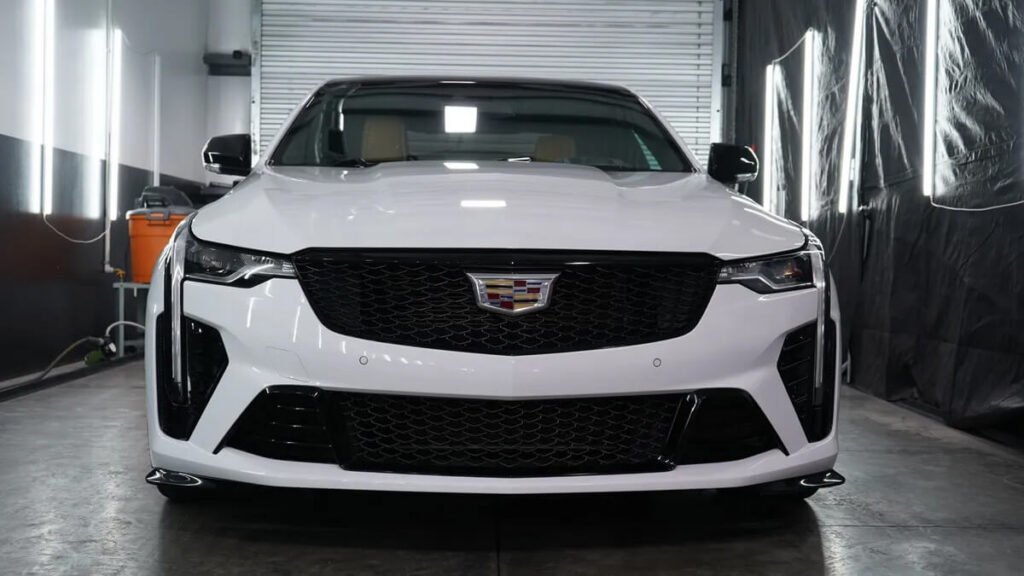
Every Houston driver has felt it — you wax the car on Saturday, and by the next month the beading is gone. Carnauba wax simply isn’t built for our climate. Surface temperatures on dark paint regularly cross 140°F in July, and that heat breaks wax down fast.
Why wax fails here
Wax is a sacrificial layer that sits on top of your clear coat. It’s soft, it’s organic, and it washes away. In a milder climate you might get a couple of months. On the Gulf Coast, with UV exposure and humidity, you’re lucky to get four to six weeks of real protection.
What a ceramic coating does differently
A ceramic coating chemically bonds to the clear coat, forming a semi-permanent layer that’s measured in years, not weeks. It resists UV, repels water and contaminants, and makes washing dramatically easier because dirt has nothing to grab onto.
- Multi-year protection instead of weeks
- Self-cleaning hydrophobic surface
- Real UV resistance to fight oxidation and fading
- A deeper, glassier gloss than wax can produce
“If you drive your car every day in this city, ceramic isn’t a luxury — it’s the cheapest paint insurance you can buy.”
— Ethan Chow, Lead Installer
We prep every coating with a full decontamination and paint correction so the coating bonds to clean, level paint — not over swirls and embedded grime. That prep is the difference between a coating that lasts and one that doesn’t.